Fusarium root rot
scouted June 13, 2023
- Scientific Name
- Fusarium sp.
- Background
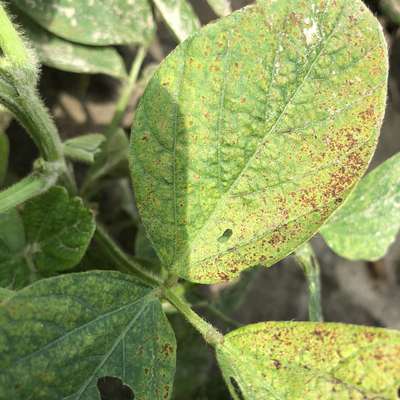
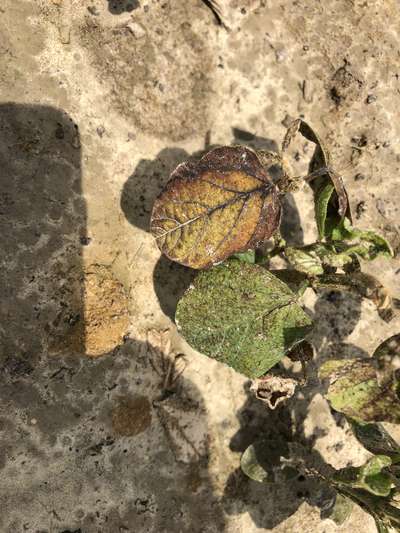
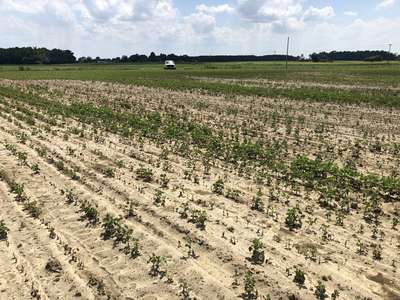
- Soybeans in Pitt county, variety Asgrow 66XE2, were scouted and observed 2% of the field was affected by dieback, browning, reddening, and yellowing, and specling/ stippling. These symptom are seen in patches and sometimes at the end of the row where the honey wagon could have turned around. These tissue samples being submitted for a field which had an apparent zinc toxicity. Swine waste was applied 2 years ago but the corresponding tissue sample that was send to another lab suggests high levels of zinc in the tissue. It has been estimated at 58 pounds per acre of N and 58 pounds of P was broadcasted before planting. A high level of potassium (834 pounds) is also believed to have been applied broadcast. This field was planted on May 5, 2023. A herbicide program which used Prefix, gramoxone, and Spectrum (surfactant) at planting was used followed by a POST program of Liberty (one quart per acre, AMS (1 qt. per acre) and Sequence at 41 ounces).
- Conclusion
- The issue was identified as Fusarium root rot. This disease is caused by Fusarium sp. Fusarium root rot can result in both pre- and post-emergence damping-off, leading to delayed emergence and stunting of infected seedlings. Prevalence tends to increase in warm and moist, but not saturated soils.
- Resources
-
- No resources have been added.