Corn earworm
scouted Dec. 3, 2020
- Scientific Name
- Helicoverpa zea
- Background
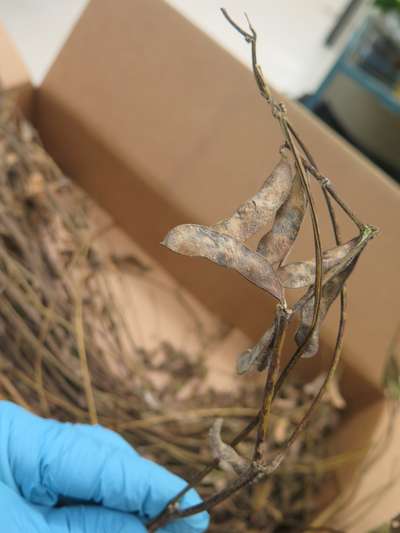
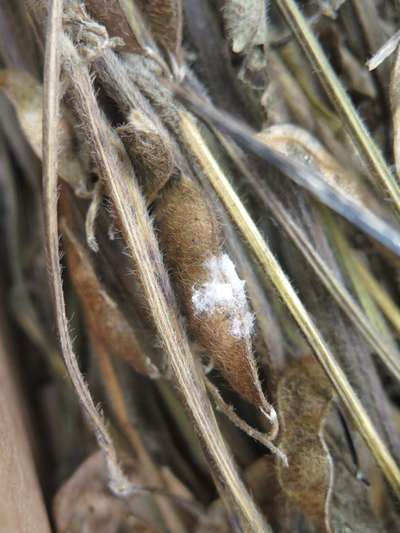
- Soybeans of Bladen county, group V, were scouted and observed 45% of the field was affected by random mycelium and rot that affected the pods.
- Conclusion
- The issue was identified as Corn earworms. This species Helicoverpa zea, also known as soybean podworm and cotton bollworm, is the most serious insect pest of soybeans in North Carolina. It overwinters as a pupa in the soil, emerges as moths in April or May, and first infests corn and wild hosts. Populations build through multiple generations in corn, especially during pollination when moths lay eggs on fresh silks. By mid-July to August, second-generation moths move from corn into soybeans and other crops, attacking soybeans just before flowering through early pod set. A later moth flight can affect very late-planted soybeans in September. Populations vary widely by year and tend to be highest in warm, dry seasons, with up to four generations possible in some years.
- Resources
-
- No resources have been added.