Black shank
scouted June 4, 2026
- Scientific Name
- Phytophthora nicotianae
- Background
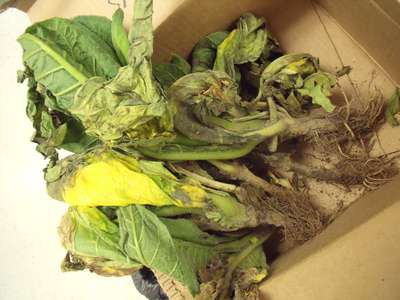
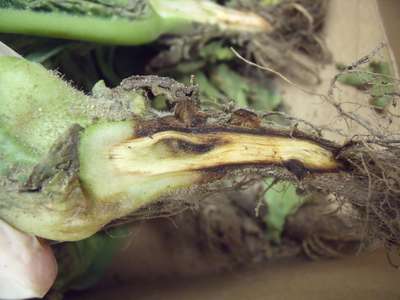
- A tobacco field, variety narrow leaf madole, was being scouted, and it was observed that 30% of the field was affected by dieback, blackening, browning, and stem rot, in patches in random areas of the field. The agent suspects black shank, so a sample was submitted to the PDIC to confirm the diagnosis.
- Conclusion
- The issue was identified as Black Shank of tobacco. This disease is caused by the soil-borne oomycete Phytophthora nicotianae and is one of the most destructive and widespread tobacco diseases in North Carolina. Black shank is favored by warm temperatures and wet soil conditions and can persist in soil for several years. The disease can occur at any growth stage of tobacco. The most common symptoms are root and crown rot, which lead to yellowing, wilting, and eventual plant death. An integrated management approach using resistant varieties, cultural practices, and chemical or biological controls is recommended to reduce long-term damage from black shank.
- Resources