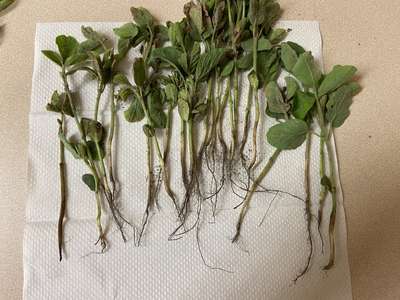
Rhizoctonia crown and stem rot
scouted June 10, 2022
- Scientific Name
- Rhizoctonia sp.
- Background
- Soybeans in Duplin county, variety Asgrow AG69XF0, were scouted and observed 1% of the field was affected by damping off, dieback, browning, and wilting in random areas.The site is sunny. Prior to planting the field was only disked. No burndown was applied. The soybeans were planted behind rye. Roundup was applied around May 31.
- Conclusion
- This issue was identified as Rhizoctonia crown rot and Rhizoctonia stem rot. Rhizoctonia crown rot can occur under various moisture conditions, preferring warm and moist soil. It is more prevalent can be increased by plant stress from herbicide or hail injury or the soybean cyst nematode (SCN). To manage Rhizoctonia crown rot, it is recommended to encourage seedling health with good agronomic practices and the use of high-quality seed. Avoiding or reducing plant stress, such as from herbicide injury and SCN infection, is crucial. Crop rotation and tillage may be beneficial where disease has been severe. Some seed treatment fungicides can reduce Rhizoctonia infection for a few weeks after planting. However, no commercial corn or soybean cultivars are fully resistant to this disease. Rhizoctonia stem rot can result in both pre- and post-emergence damping-off, leading to delayed emergence and stunting of infected seedlings. Rhizoctonia prefer warm and moist soil conditions.
- Resources
-
- No resources have been added.