Root rot
scouted May 31, 2024
- Scientific Name
- Pythium sp. and Fusarium sp.
- Background
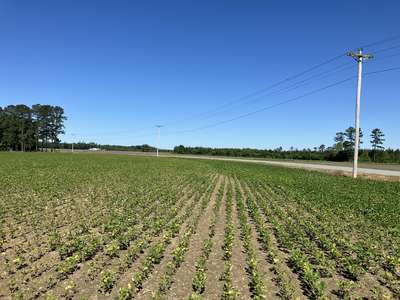
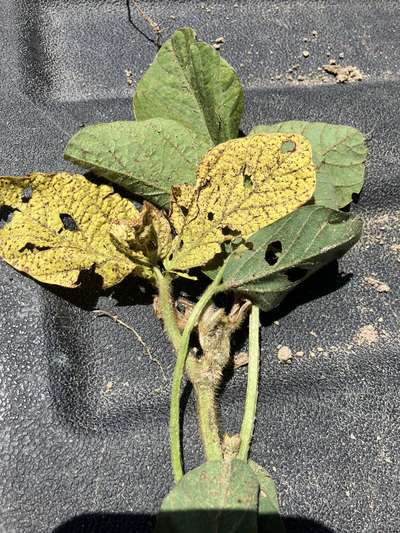
- Soybeans in Bertie County were scouted, and approximately 5% of the field was observed to be affected by dieback and yellowing between the veins in patches throughout the field. These patches occurred in lower areas with heavier, wetter soil. The field experienced high rainfall this year. Although the soybeans emerged uniformly after planting, plants in the low-lying areas have since shown symptoms beginning with chlorosis and progressing to necrosis. The field was planted to cotton the previous year, and it is noticeable where the strip-till tool created a slight 1-inch berm. Plants positioned on top of the berm are visibly greener compared to the surrounding areas.
- Conclusion
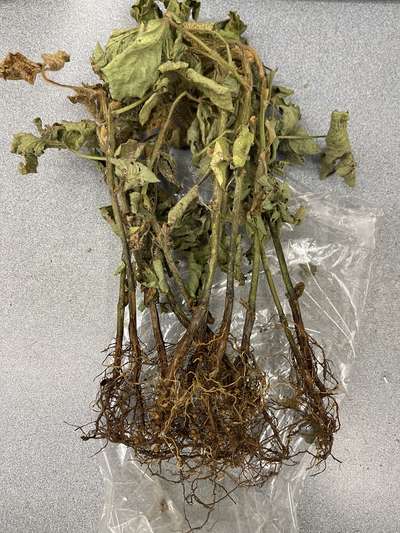
- The cause of the disease was identified as Pythium sp. and Fusarium sp. Fusarium root rot can result in both pre- and post-emergence damping-off, leading to delayed emergence and stunting of infected seedlings. Root rot symptoms typically manifest as dark brown discoloration, with lesions extending through the vascular tissue to the hypocotyls and are often accompanied by the absence of secondary roots. Pythium species have a very similar survival mechanism and infection process. The overwintering oospores will germinate in saturated soils infecting the plant or producing more infectious spores that move through water to infect healthy plants. Pythium species overwintering oospores will germinate in saturated soils infecting the plant or producing more infectious spores that move through water to infect healthy plants.