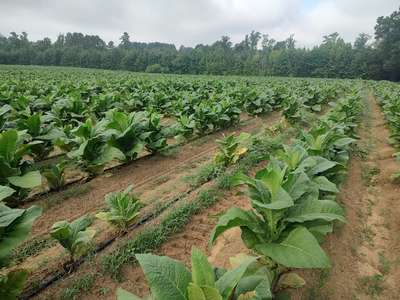
TSWV
scouted July 9, 2026
- Scientific Name
- Tomato spotted wilt virus
- Background
- A tobacco field in Granville County was being scouted, and it was observed that 20% of the field was affected by dieback, yellowing, leaf spot, scorch/burn, stem rot, stunting, and wilting in random strips in the field. The site was dry and sunny, and the plants had not been supplemented with water. A sample was submitted to the PDIC for diagnosis.
- Conclusion
- The issue was identified as Tomato Spotted Wilt Virus (TSWV) on tobacco. This disease is caused by a virus in the Orthotospovirus genus and is transmitted by thrips, primarily tobacco thrips (Frankliniella fusca) and western flower thrips (F. occidentalis). Not all infected tobacco plants develop symptoms, and severity can range from mild to severe. Symptoms typically appear 2 to 3 weeks after infection, which makes early detection difficult. Common symptoms include necrotic spots and concentric rings that initially appear yellow and later turn brown. There is no cure for TSWV, but reducing thrips populations through chemical and cultural practices can help limit the spread of the disease.
- Resources